Who Was Stuck, and Where? Write It Down Before You Build
A feature name isn't a reason to build something.
So What's the Problem?
Say someone on a project announces that we need a lobby. Or AR at the entrance, or an automatic follow-up email. Everyone opens Unity or Figma, and within a week there are cards on the board and a demo to show.
Three weeks later the client asks what it was for. The best anyone can do is say the feature name again.
This is not good.
Nobody can point at the person who was struggling before the change. Vague tickets make it worse. Three people can write copy for "improve onboarding" without any of them knowing the minute a guest actually got stuck.
What's the Solution?
Before anyone opens a tool, write one short paragraph: who is stuck, where, and at what moment. Something you could film.
Say it's a live night. A guest scans the QR code at the entrance and the page won't load on the venue Wi-Fi. Staff help people one at a time while the queue backs up, and the night starts late.
That paragraph is the brief. A ticket called "better onboarding UX" tells you none of it.
The scene also tells you how to check the fix afterwards. Did people get in? Did the night start on time?
The same goes for mood words. "Make it more immersive" can't be tested. "People check their phones during the first silence" can, and you'll know on the night whether your fix worked.
How Do I Use It?
If you can't write the scene, you don't know what to build yet. So before anything gets built, I check four things:
- Someone can name the stuck person. If not, nothing starts.
- The paragraph sits at the top of the brief.
- It stays there when the brief changes.
- Any ticket whose only reason is a feature name gets cut.
(Harsh, I know.)
What Does That Look Like?
Take the second screen at my Fak'ugesi talk on 15 October. Written as a scene, the problem looks like this: someone in the audience gets one notification, opens the group chat, and misses the next ten minutes of the talk.
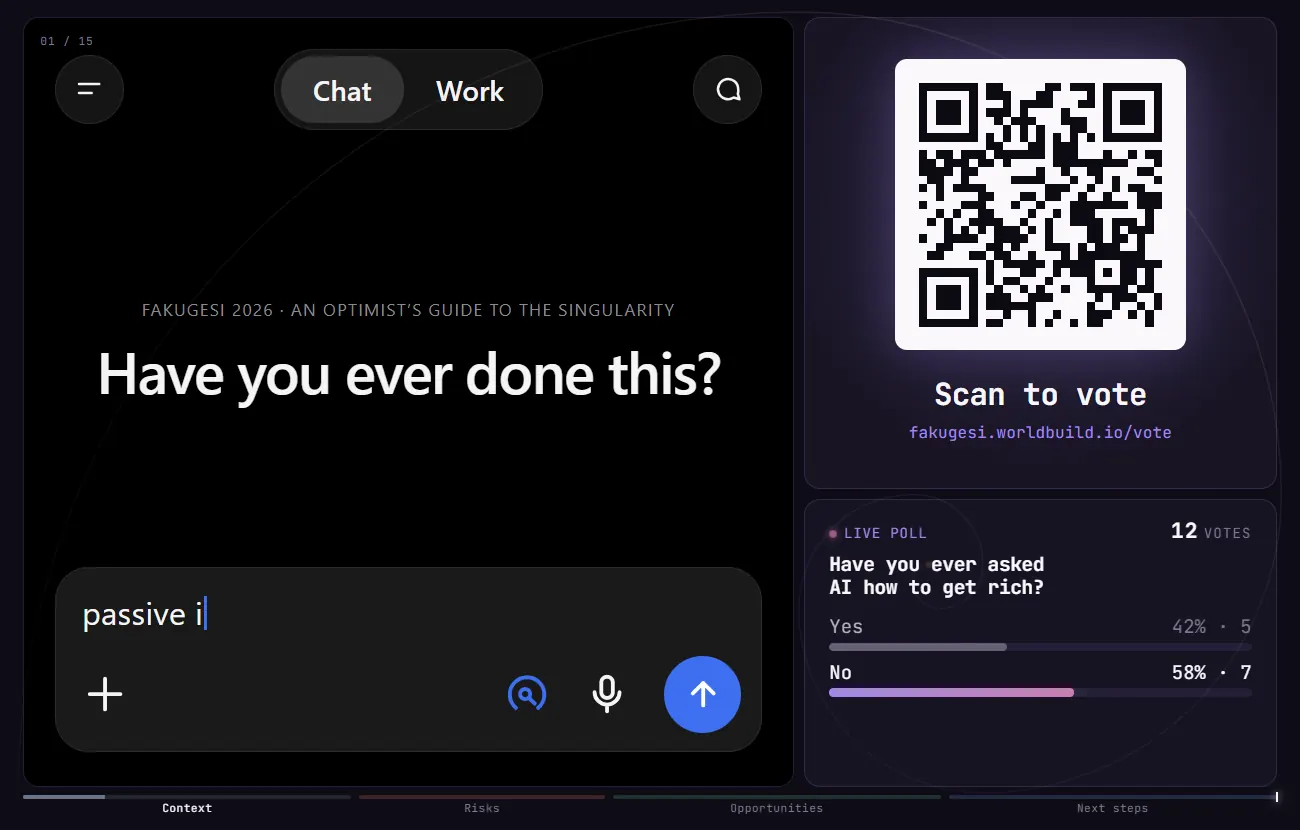
The fix follows from the scene. The phone only shows the current question and your answer. There's nothing to scroll. The results go on the big screen, so to see them you have to look up at the stage.
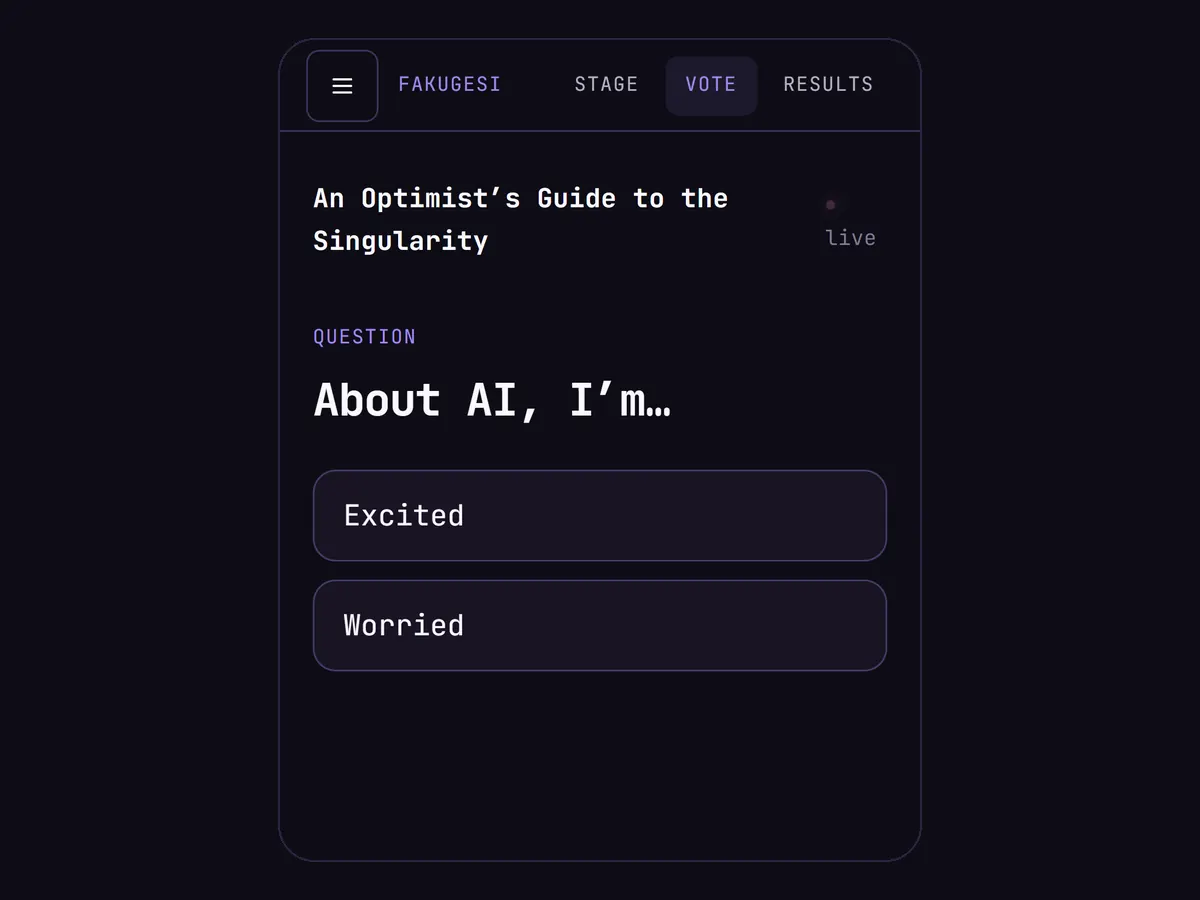
How that went is written up in Phones Out, Please.
What's Next?
Try it on your next brief. Write down who was stuck, and where, before you open the editor. Then tell me what changed.
Related: Test the First Minute With Three Strangers.
Virtually yours, Deac