Choose Slow Dopamine
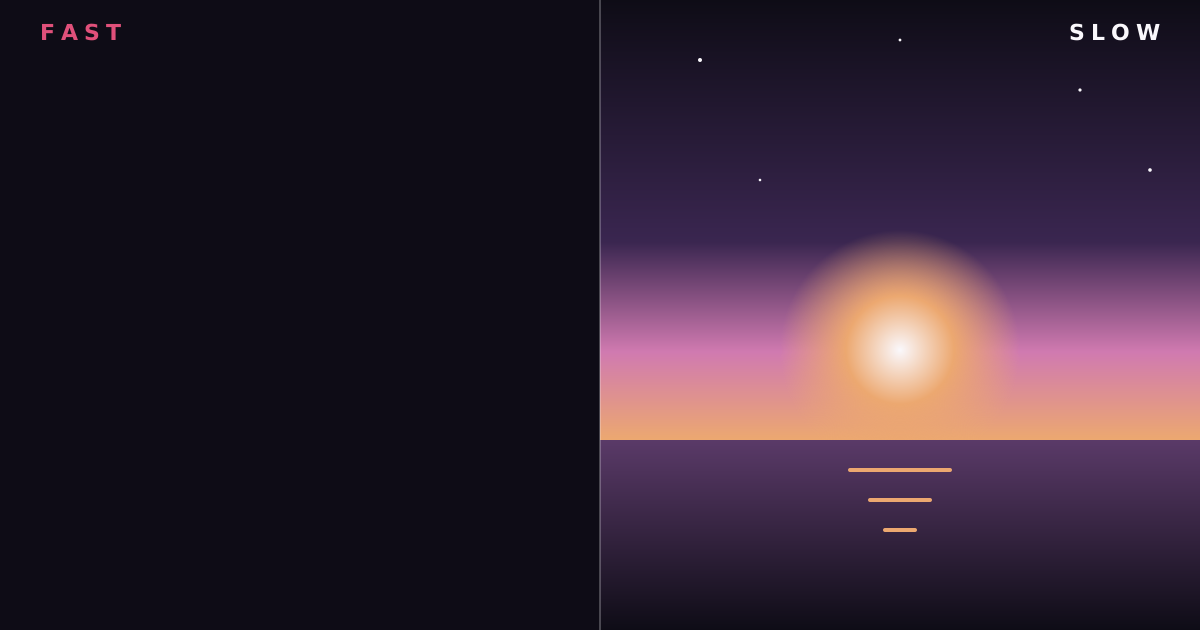
There's a list going around called "Choose Slow Dopamine". Read long books, call your friends, watch more sunsets. That kind of thing.
What I like about it is what every item has in common. Each one asks you to be in one place, doing one thing, for a while.
That's what I want from VR. I know a headset is a screen strapped to your face. Bear with me.
Everything Wants a Piece of You
Count what's asking for your attention right now. Notifications. A second screen in your lap while the first one plays. Feeds with no bottom, because they're built that way. Talking heads explaining, every evening, that it's all about to go wrong.
Each one only takes a few seconds. Add them up and there isn't much of you left for wherever you actually are.
I'd call myself a rational optimist. The world has serious problems, and they deserve attention. But a feed of people shouting about them doesn't make anyone safer. It just keeps you watching.
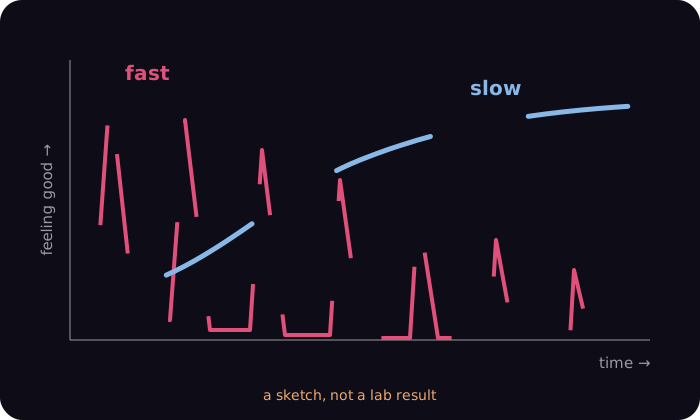
Note: This is a sketch, not a neuroscience paper. Brains are a lot messier than two lines. But you know the feeling of both.
Being Here
Mindfulness sounds like a big word. It isn't. You notice what's happening now: your breath, the sounds around you, the weight of your feet on the floor. When your mind wanders off (it will), you notice that too, and come back.
That's it. Simple, but not easy.
Nothing about it is new. People have been sitting still and paying attention for thousands of years. What's new is how much is built to stop us.
Flow
Then there's flow. The psychologist Mihaly Csikszentmihalyi spent decades studying it, and his book Flow came out in 1990. It's the state where you're so absorbed in something that you lose track of time. Musicians know it. Climbers know it. Anyone who's looked up from a project and found it's dark outside knows it.
Flow happens in a narrow channel. If the challenge is too hard for your skill, you get anxious. Too easy, and you get bored. In between, you forget yourself and just do the thing.
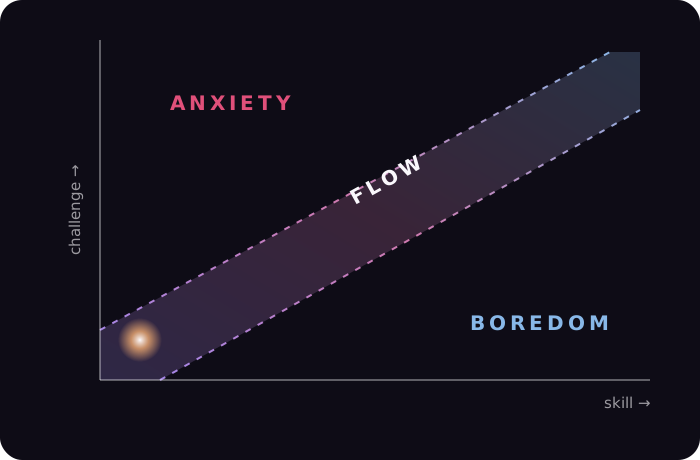
It takes a while to get into flow. A notification can knock you out of it in a second. Then you start climbing again.
What a Headset Does
Here's why I make worlds for VR. While the headset is on, the world fills your whole view. There's no second screen in your lap, and your phone is somewhere on the desk, out of sight.
VR people call the result presence: the feeling that you're actually there. Your body believes the cliff edge, even when your head knows better.
Presence and mindfulness turn out to be pretty close relatives. Both are about being fully where you are. A good world makes that easier by leaving everything else outside.
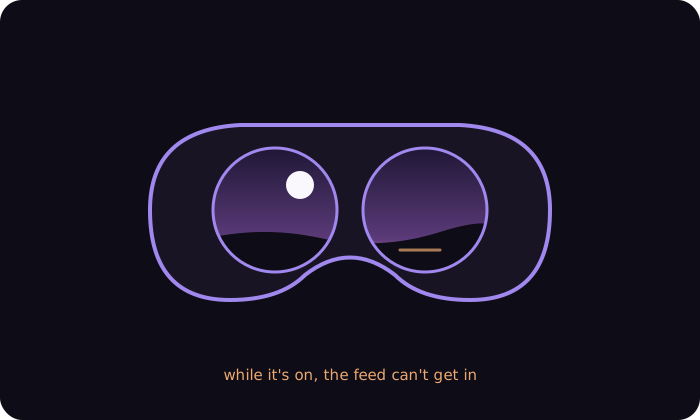
(One caveat. Quest can mirror your phone's notifications into the headset. Turn that off.)
Breathe With Me
Let's try it now. Follow the flower. Breathe in for four seconds as it opens, and out for six as it closes. Do it five times. That's under a minute.
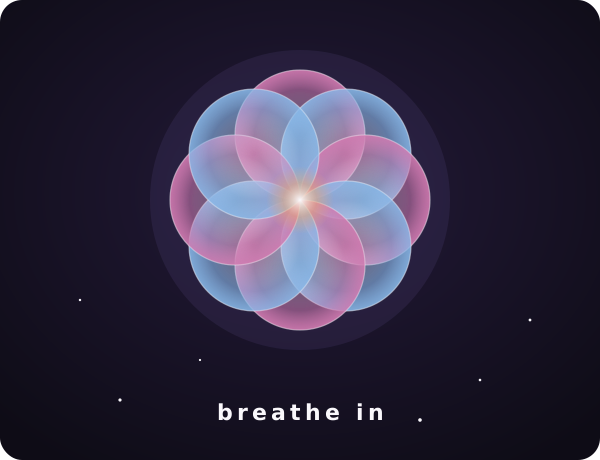
A lot of breathing guides use a longer out-breath than in-breath. Try it, and see how you feel afterwards.
One Moment, All of It
That's what VR is, at its best. Presence, mindfulness and flow, in one place. There's one moment, and you get all of it.
With nothing pulling at you, you notice more. Who's talking, and where their voice is coming from. Where the light falls. How long you've been sitting there, watching the sky change.
Here's a sunset. It takes ninety seconds. Watch it anyway.
Make Worlds That Slow People Down
VR can go the other way too. Plenty of apps run on the same loops as your phone: points, streaks, pop-ups, one more round.
If you build worlds, you get to choose. Leave out the pop-ups. Give people somewhere to sit. Put the best view at the end of a long walk, and let them stay as long as they like.
And take the headset off now and then. The ocean isn't going anywhere.
(Yes, last week I asked a whole audience to get their phones out. Different problem. Phones Out, Please.)