Producing When AI Makes Takes Cheap: A One-Page Run of Show
A good cut can still go wrong between beats.
This is part 2 of my series on working when AI makes takes cheap. Part 1 was about directing: write the guest's first minute, then pick the takes that serve it. This one's about producing.
I hand most of the generating to bots these days. The plan for the guest's evening is something I still write myself.
So What's the Problem?
Directing picks what the guest should notice. Producing decides when they arrive, wait, play, hand back the headset and leave.
When takes are cheap, there's always one more to make. The folder grows, and nobody owns the minute-by-minute plan. That's when you get a guest standing at the entrance with nobody to greet them, or two cues firing at once while staff make up the order on the night.
So What's the Solution?
Write a run of show. That's a timed list of who does what, and when. Keep it to one page, so it fits on a clipboard at the entrance.
Start with the guest's clock: arrive, wait, play, hand back the headset, leave. Next to each step, write a time and the name of the person who cues it. For one guest at a headset stand, it might look something like this (the times are only an example):
| Minute | The guest | Who cues it |
|---|---|---|
| 0 | Arrives and gets greeted | Host |
| 2 | Sits down, headset on | Host |
| 3 | Piece starts | Cue owner |
| 15 | Piece ends, headset off | Host |
| 17 | Leaves, next guest sits down | Host |
On your own sheet, swap the roles for people's names.
Then cap the generated material. Every take has to sit on a beat on that page. If it doesn't, delete it, or park it for another project. If a take makes the guest wait with nothing to do, cut it. Keep what gets them to the next step.
The test is simple. A stranger finishes the path on time, and nobody on staff has to rewrite the plan halfway through.
If your run of show runs past one page, I have questions. ;)
What's Next?
Before your next build day:
- Write a one-page run of show with times and names.
- Match every generated take to a beat on that page, or delete it.
- Rehearse once with a phone timer and no coaching. Fix the stalls before you generate anything else.
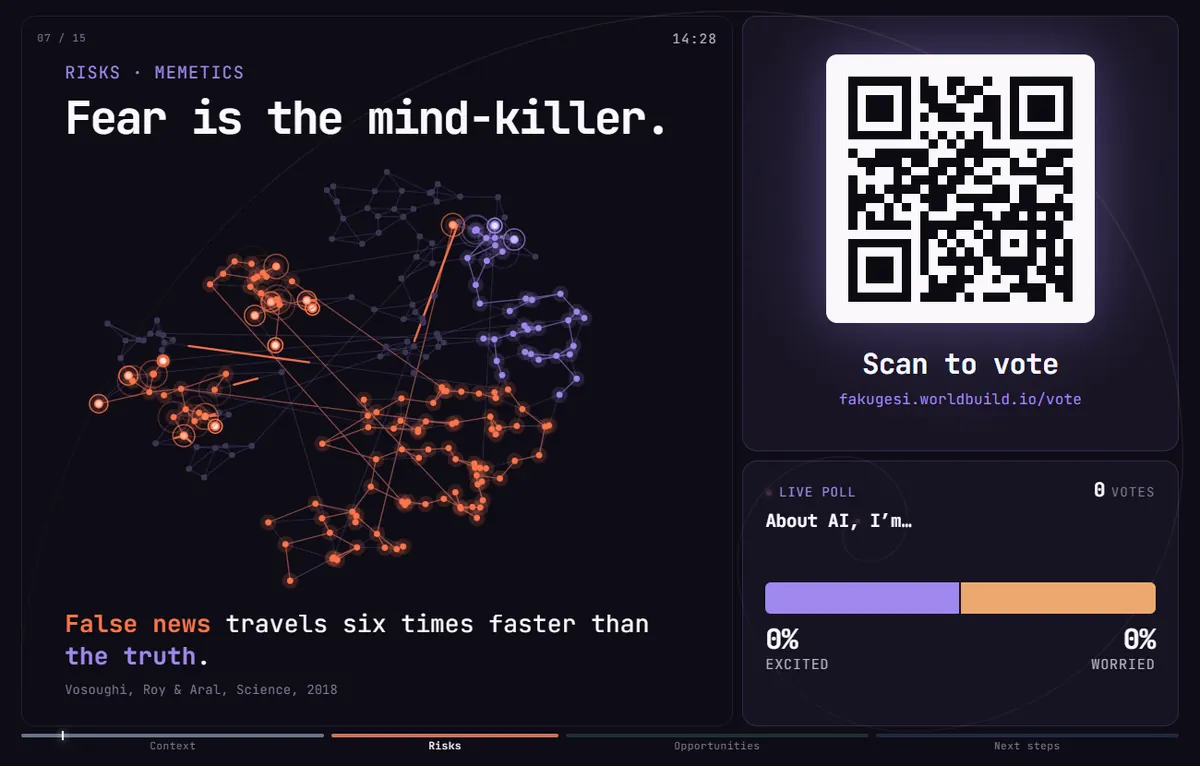 My talk app in rehearsal. The clock counts down from 15 minutes, and the bar shows which part of the talk I'm in.
For the night itself, there's my opening-night checklist.
Related: Directing When AI Makes Takes Cheap: Write the First Minute (part 1).
Virtually yours, Deac